What an AI automation agency does
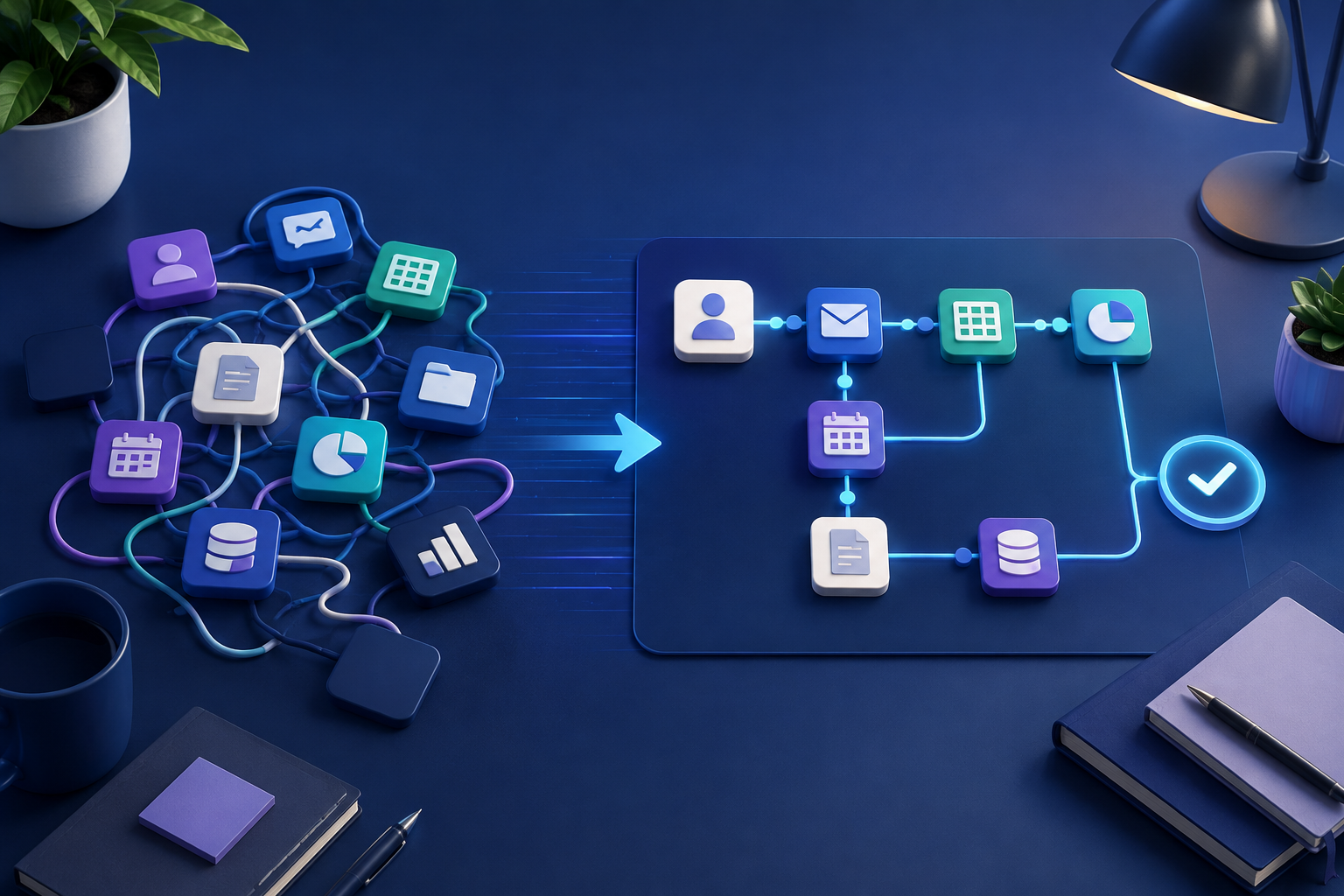
An AI automation agency designs, builds and maintains systems that take over repetitive work in your business using AI models and workflow tools. Typical jobs include sorting incoming enquiries, drafting replies for a person to approve, extracting details from documents, updating a CRM, and answering routine questions through a chatbot. You can see how we describe our own services for comparison.
The offer usually has three layers:
- Discovery: understanding your process and picking what to automate.
- Build: connecting your tools, writing prompts and rules, and testing.
- Run: monitoring, fixing and adjusting after launch.
Business automation services range from a one-off workflow to a long-term managed system, so the label alone tells you little. Agencies differ mainly in which layers they emphasise. Some build quickly and leave. Others stay on to maintain the system. Knowing which you need is the first step in choosing an AI automation agency, and it keeps you from paying for AI automation services you will not use.
Before you talk to anyone: define your first project
Agencies quote better, and you judge them better, when you arrive with a clear brief. Spend an hour on this worksheet.
The free AI Workflow Map can help you list your steps before you start.
- Name one process. Example: "Every new website enquiry is read, sorted by type and answered by hand within a day."
- Count the work. How many times a week, and how many minutes each time? Example: 40 enquiries a week at 6 minutes each is 240 minutes, or 4 hours a week.
- Write what "done" looks like. Example: "Routine enquiries get a correct draft reply within 5 minutes; a person approves it; unusual ones are flagged."
- List the tools involved. Email, CRM, spreadsheet, helpdesk, accounting software.
- Note what must stay human. Refunds, complaints, anything with legal, medical or financial consequences.
- Set a decision point. Pick a date to judge whether the pilot worked, and what number would count as success (for example, "at least half the drafts need no edits").
If you cannot complete steps 1 to 3, you need a discovery conversation before a build, and a good agency will say so.
The 7-point checklist for comparing agencies
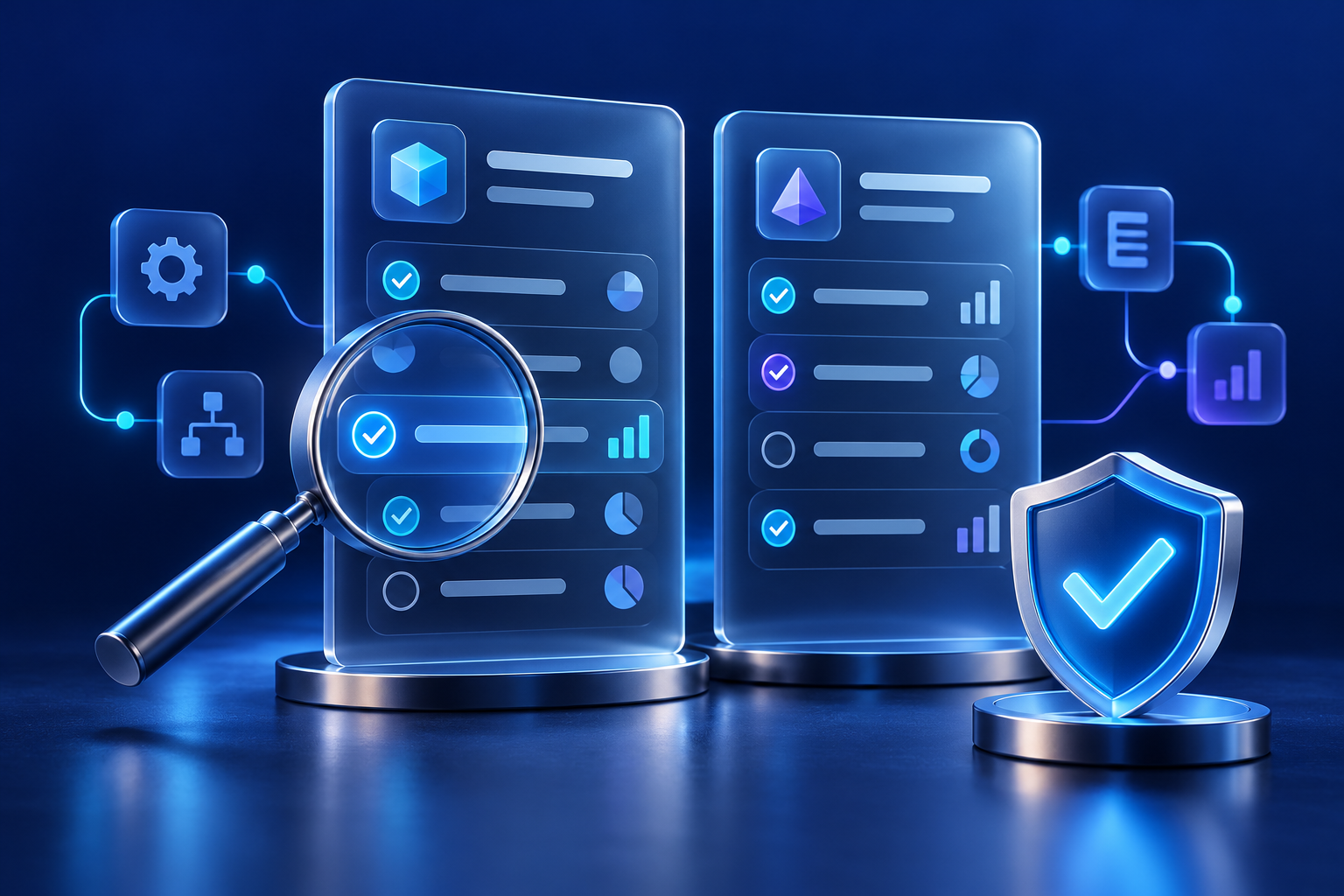
When you shortlist two or three providers, use the same checklist for each so the comparison is fair. Score each agency from 1 to 5 on each point, then compare totals. These are criteria, not a guarantee of results.
- Relevant experience. Ask for a description of a similar project (agencies often show examples on a projects page, such as ours at newageai.co/projects): the problem, what they built, how long it took, what changed. Be wary of vague claims. Ask whether you can speak to a past client. Do not rely on testimonials on a website alone.
- A clear process. Look for a stated path: discovery, a small pilot, testing, launch, review. An agency that jumps to a large build without a pilot carries more risk for you.
- Honest scoping. A good agency tells you what automation will not do well. If every problem sounds like an easy win, be careful.
- Tool fit and ownership. Find out which platforms they use, whether you can see and edit the workflows afterwards, and who holds the accounts and API keys. Get ownership of the workflows, prompts and documentation settled in writing.
- Data handling. Ask where your data is processed and stored, which AI providers are involved, whether data is used for model training, and how deletion works. Compare the answers with your own privacy obligations.
- Testing and quality control. Ask how they check accuracy before launch and how errors are caught afterwards. Look for a test sheet, human approval steps and logging.
- Support after launch. Automations break when a tool changes its settings or a model changes behaviour. Ask who fixes problems, how fast they respond, and what ongoing support costs.
Questions to ask on the first call
Use these in order. A short, specific answer is a good sign.
- "Which part of my process would you automate first, and why?"
- "What would you leave to a human?"
- "How will we know in 30 days whether it worked?"
- "Which tools and AI models would you use, and why those?"
- "Who owns the workflows, prompts and accounts at the end?"
- "Where does my data go, and who can see it?"
- "What happens if the automation gets something wrong?"
- "What does the work look like after launch, and who does it?"
- "What do you need from my team, and how many hours a week?"
- "Can I see a similar project, or speak to a past client?"
How to compare two proposals side by side
Copy this table into a spreadsheet and fill it in for each agency. Prices vary widely between agencies and projects, so compare structure, not just totals.
| Item | Agency A | Agency B |
|---|---|---|
| Scope in one sentence | ||
| Pilot included? | ||
| Time to first working version | ||
| Pricing model (fixed, hourly, monthly) | ||
| What is excluded | ||
| Tools and AI models used | ||
| Ownership of workflows and prompts | ||
| Data handling described? | ||
| Testing method | ||
| Post-launch support terms | ||
| Your team's time required |
Worked example. Agency A quotes a fixed amount for a full build in six weeks, with no pilot and support billed separately. Agency B proposes a two-week pilot on one process, then a decision. A has a clearer total, but B limits your risk if the idea does not work. Add one more line: "What is the cost if we stop after the pilot?" The answer often settles the choice.
Pricing models in general: fixed price gives certainty if the scope is clear, hourly suits uncertain scope but can grow, and monthly retainers suit ongoing improvement. Ask what is included in each, and what triggers extra charges.
Red flags
- Promises of specific results ("save 80% of your time") before seeing your process.
- No questions about your current workflow.
- Unwillingness to describe how data is handled.
- No discussion of testing, errors or human review.
- Workflows built in accounts only they control.
- Pressure to sign quickly.
- Replacing staff presented as the main goal, rather than freeing time for better work.
What a good first project looks like
A good first project with any AI automation agency is narrow, measurable and low-risk. Look for:
- A repetitive task done at least weekly.
- Clear rules or approved answers a person can check against.
- A human approving output at first.
- A result you can measure in hours saved or response time.
- Few systems to connect.
Whatever you pick, write the success number down before work starts, so the review is about evidence and not impressions. Examples: drafting replies to routine enquiries, sorting and tagging incoming requests, or turning a form into a CRM entry. If you want a chatbot as the first project, our guide to setting up an AI chatbot for business walks through scoping, testing and launch.
Next step
Choosing an AI automation agency gets easier once your brief is written. If you want a second opinion on scope before you approach agencies, the New Age AI team can talk through your process on an AI Strategy Call. You can also read about New Age AI or browse more resources.
Quick answers
Frequently asked questions
Want to map the right workflow first?
Talk through the repetitive work in your business and identify the automation opportunities worth prioritizing.
Book a strategy call